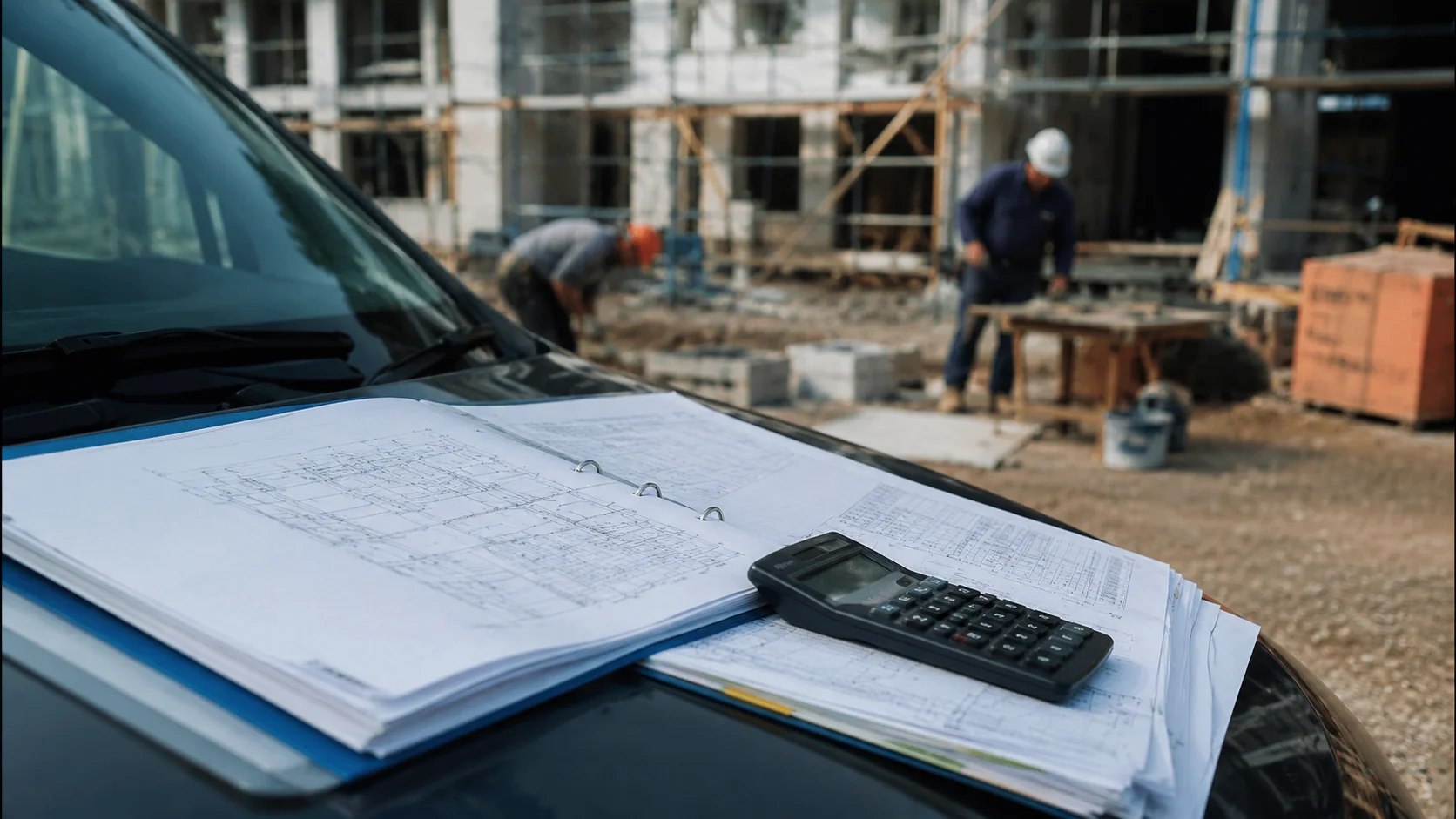
The crews are on site and the work is progressing. But back at the office something else is happening: your work planners, schedulers and project managers spend a large part of their day calling, emailing and messaging to find out where projects stand. How many hours have been booked? Has the material been delivered? Has the additional work been approved? The information exists, but nobody has it readily at hand.
The real problem: the data already exists, but nobody can reach it
Your hours sit in time tracking, your budgets in the calculation, your purchasing in the ERP and the latest agreements in someone's mailbox or WhatsApp. Separate islands, all of them. Anyone who wants to know how a project is doing has to phone around to piece it together. That coordinating isn't the exception, it has become a daily routine.
~20%
of the workweek, roughly a full day, is what knowledge workers spend searching for internal information or tracking down the colleague who has the answer, according to McKinsey. On a construction back office that chasing is the rule rather than the exception.
Coordinating is expensive, and in construction especially so
Poor coordination doesn't just cost time, it costs money. Errors that arise because information comes through too late or incorrectly are known in construction as failure costs. And they are substantial.
10-11%
of revenue is lost to failure costs in construction, as Dutch research by USP Marketing Consultancy has estimated for years. The most cited cause is consistently the same: poor information exchange and communication, especially during work preparation and execution.
Which repetitive office work can you remove?
A large part of the office work in construction is recurring coordination and updating that requires little expertise:
- Chasing and coordinating status: calling and emailing to find out how a project is doing
- Updating the planning and schedules by hand after every phone call
- Re-typing hours from notes and messages into the administration
- Piecing together additional and reduced work from emails and Excel
- Manually assembling project overviews for the Monday morning meeting
- Checking whether the figures in the different systems actually match
How a real-time dashboard communicates for everyone
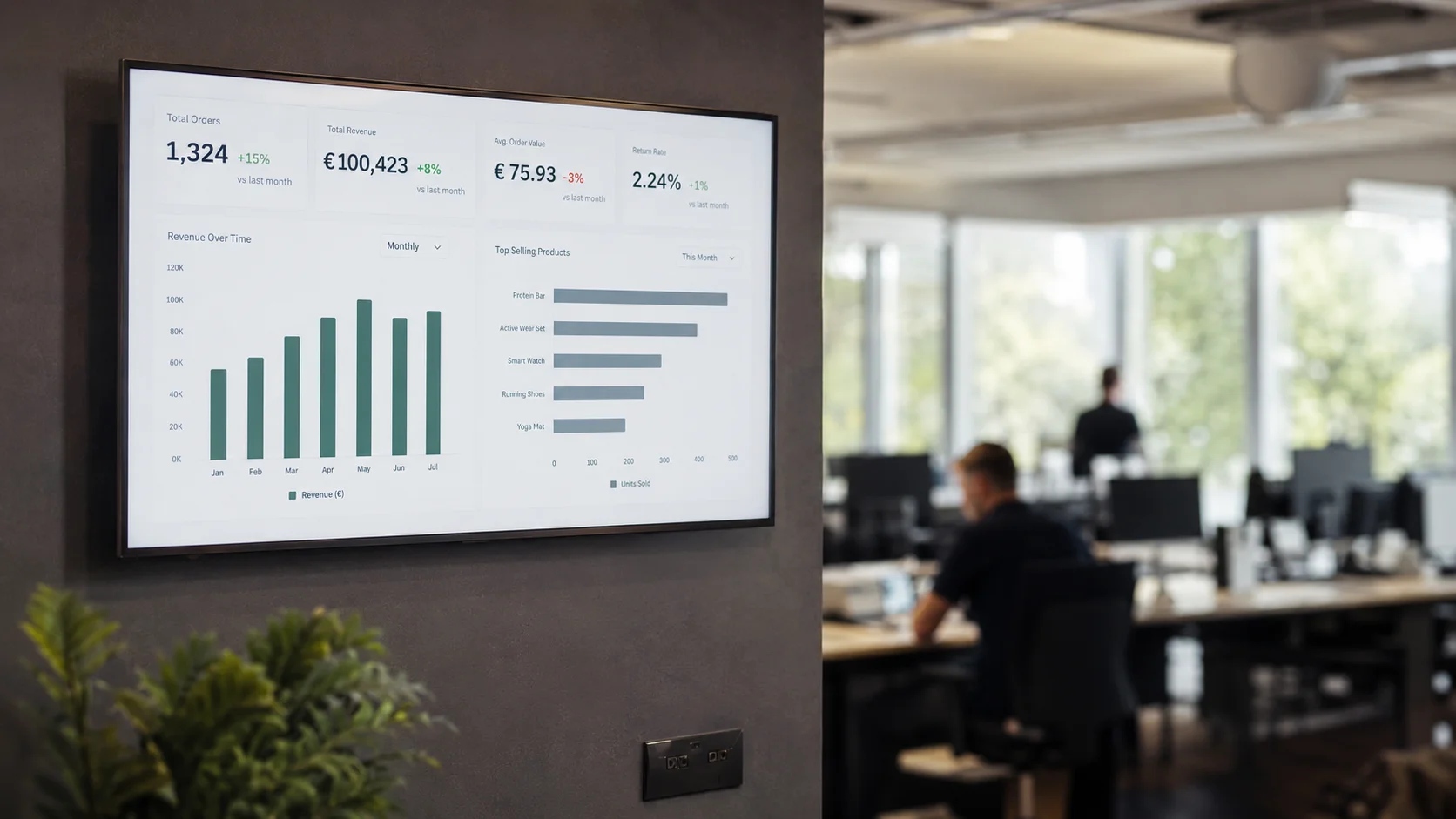
The moment the same current figures are visible to everyone, at the office and in the site cabin, nobody has to call to ask how things stand. The question 'are we on schedule?' is already answered on screen. Planners plan on actual hours and progress instead of on hearsay, and the project manager sees for themselves whether a project is heading toward its budget. The coordinating doesn't disappear because people work harder, but because the information is simply already there.
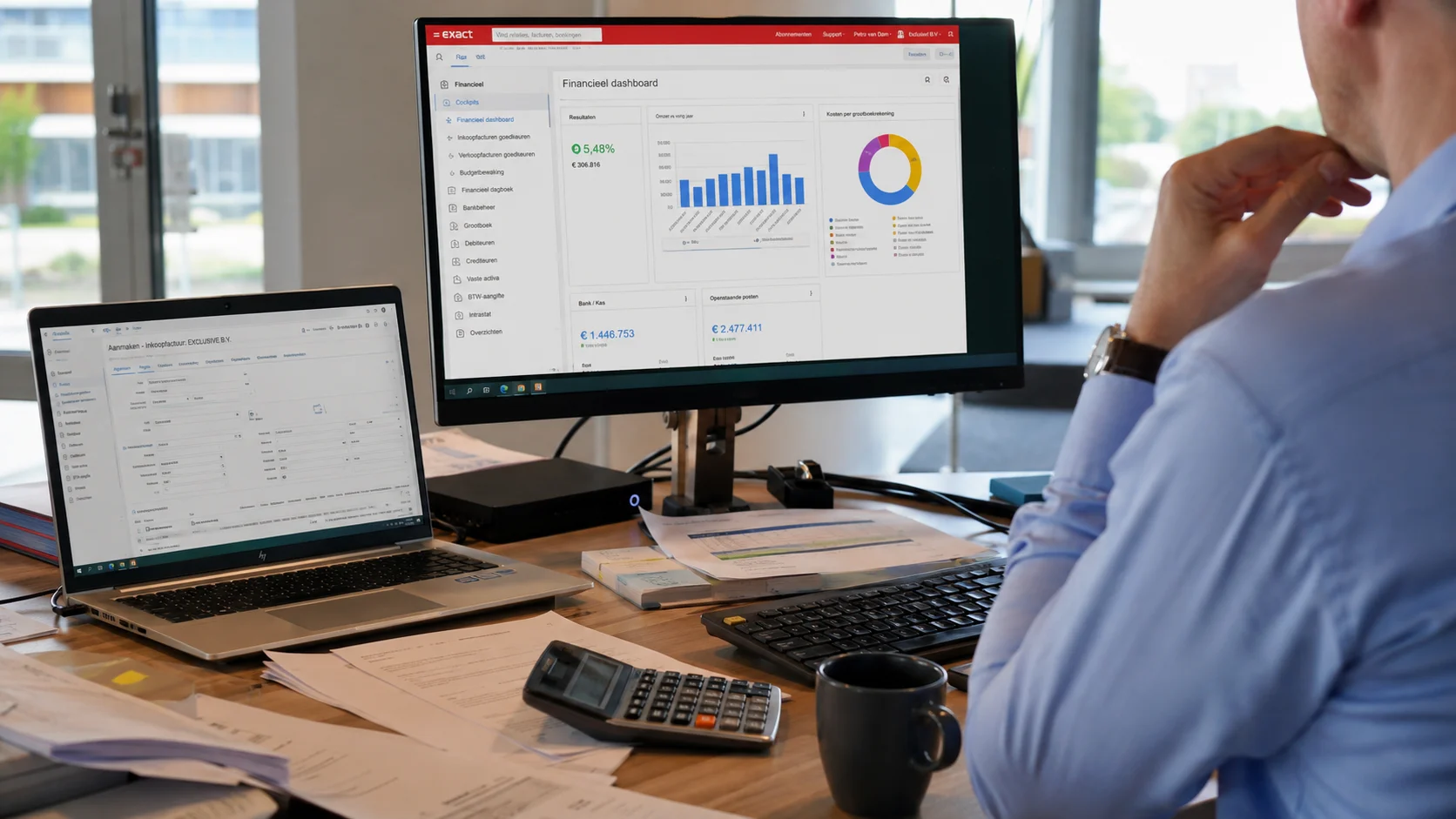
Ralect connects your construction ERP and planning, think AFAS, Exact or 4PS Construct, and shows project progress, hours versus budget and additional work live on one screen. At the office and in the site cabin everyone sees the same current figures, so the chasing and coordinating largely disappears.
From making things visible to working together in one system
A dashboard that unlocks your existing systems already removes a lot of phone calls: the status is simply on the screen. But the latest agreements then still live in mailboxes and chat messages. The step further is one system where not only the figures come together, but the work and the communication too: one chat and activity log per project and per record, so an agreement, a photo or an approval lands in the right place straight away instead of in someone's inbox.
That's what Ralect One adds: alongside the overview, the operation itself runs in one environment, from request and quote to planning and delivery, with office and field on the same source. The chasing then disappears not only because the figures are visible, but because there's nothing loose left floating around to go after.
What does that deliver?
Do the math. Suppose a few people at the office each lose a couple of hours a week to coordinating and chasing status. Remove most of that and you free up close to a day a week of capacity, time that can go to preparation, calculation and customers instead of to figuring things out.
Curious what that means for your construction business? Our ROI calculator shows you in a few clicks how much time and money you save by removing this repetitive work. Then schedule a free call.