
You have landed a sizeable job at an extremely healthy calculation. The crews are ready, the planning fits and the materials are locked in. But six months later, at the final settlement, reality hits: the actual profit margin is nearly halved compared to the budget. This painful scenario is a weekly occurrence for thousands of companies in construction, engineering and large-scale contracting.
Why do project margins evaporate so quickly?
Organizations working in long-running project teams with multiple parties almost always run into the limits of their manual overviews. Hours that come through to the office too late, purchase invoices that aren't immediately tied to a project code, and additional work that's quietly settled on the work floor but never finds its way to the administration. As long as you only see the current margin at final delivery, you are driving blind. Adjusting course once the project is already delivered is impossible.
The 4 biggest margin killers in project-driven work
Companies across the board structurally struggle with the same imbalance in their financial planning. Profit usually leaks away through the following factors:
- Silent additional and reduced work: Changes that take place after the handshake, but lag behind on the final invoice due to poor processing in the workflow.
- Hours over budget: Build-up of unpredictable hours due to inefficiencies on the building site that aren't flagged in time by project managers.
- Fluctuating purchasing: Material costs that, due to scarcity, inflation or rush orders, heavily exceed the original calculation.
- Subcontractors: External crews that, due to failure costs or overruns, systematically have to write off more hours or material than calculated.
The very biggest leak: Uninvoiced additional work
Additional work is the absolute weak spot. Customers ask for last-minute changes, or site supervisors suddenly solve a problem outside office hours that isn't part of the task package. The people on the floor solve it expertly, but because the process is complex, this work never ends up neatly documented in the invoicing to be included. With this, hard return disappears straight out of the till.
Loss through administrative backlog
In construction and technical projects, additional work easily adds up to 10 percent or more of the contract sum, and a real part of it slips through uninvoiced when the link between work floor and office is weak. On a half-million contract, even a few uninvoiced percent means tens of thousands of euros in margin walking straight out the door.
Insight into schedules: Where did the time go?
Staff who, at the end of a long, hard work week, 'quickly' enter the timesheets for the administration simply fill in gut-feeling estimates. As a result, the detail for the calculation blurs, and halfway through the process the project manager or management absolutely does not know which man-hours were really spent on which specific task. That repetitive shuffling of numbers makes it nearly impossible to keep tight control of planning and margins.
Smart project-driven SMBs measure the state of the margin in real-time phases as standard (such as 25%, 50% and 75% progress). If hours or purchasing unexpectedly turn red at the 50% line, there are still plenty of opportunities ahead to strategically turn the tide toward profit.
No data, no steering wheel
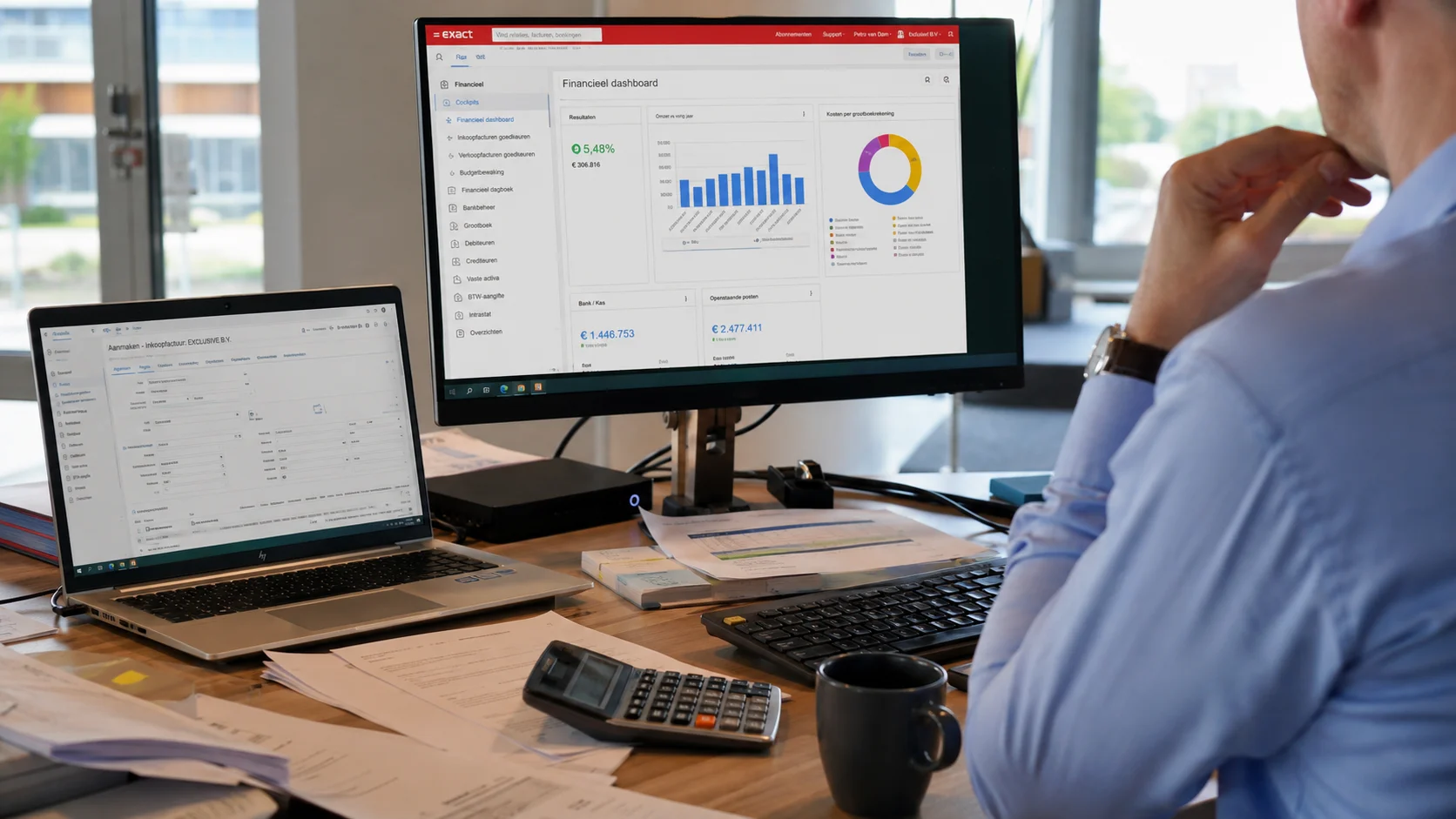
Ultimately, the real breakthrough for project-based SMBs lies in current, central figures. By intelligently welding your systems together, think of solid and well-known ERPs like AFAS, Exact, Syntess, Kraan or 4PS, you prevent hours, materials and outstanding additional work from only reaching the manager after delivery.
But there's a difference between making margin visible and catching the leak at the source. A dashboard shows the margin; it can't recover the additional work that was never recorded anywhere. For that you need one environment where the project itself runs, so every change, every additional-work note and every hour booked is tied to the right project straight away.
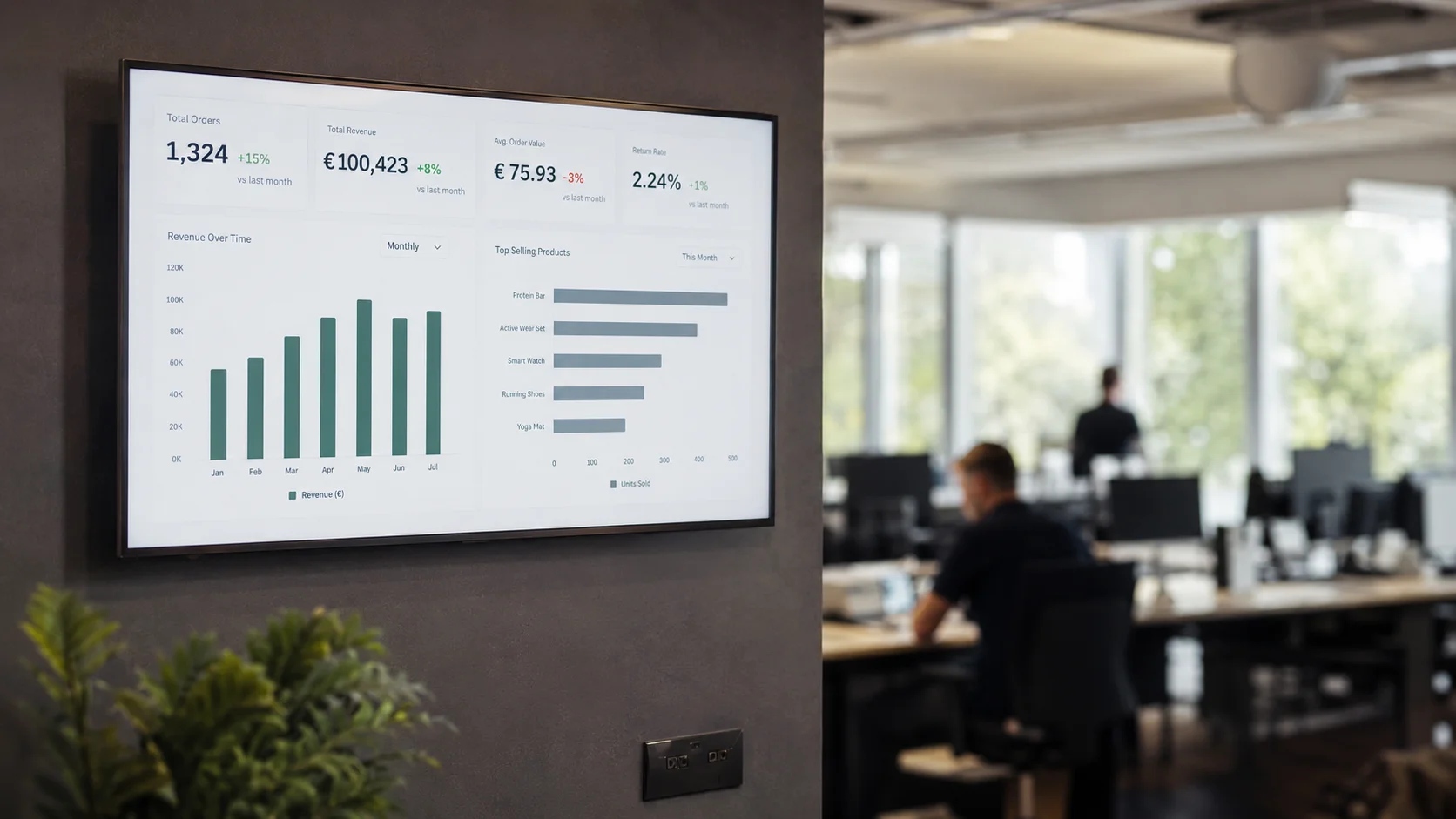
Ralect builds this two ways. If you want to keep your current ERP, we show live on a dashboard whether your project margins are still viable, in hours versus budget, without you fiddling in three impossible Excel overviews. If you want to go further, Ralect One brings the whole flow from request to delivery into one system, so no margin slips away along the way between the work floor and the administration.