Imagine driving a car but only being able to look in the rearview mirror. That's what running a business on monthly reports feels like. You know how it was, but you don't know how it is right now. While you're compiling that report, new decisions are already being made based on the wrong information.
What does a monthly report actually cost you?
There are two types of costs. The direct costs: the hours you, your controller or your team spend compiling the report. At many SMBs this is easily a day or two of work each month. At a loaded hourly rate of around €50, that quickly runs to several hundred euros a month, purely for assembling information, not for analyzing it.
A day or two
of work each month is what assembling management reports by hand easily swallows, time that goes into collecting figures rather than acting on them.
Then there are the indirect costs: decisions made too late because the information wasn't there. A product that has been at a loss for three weeks but is only flagged at the end of the month. A project already at 130% of its hours budget but only noticed at final settlement.
What does 'real-time' mean in practice?
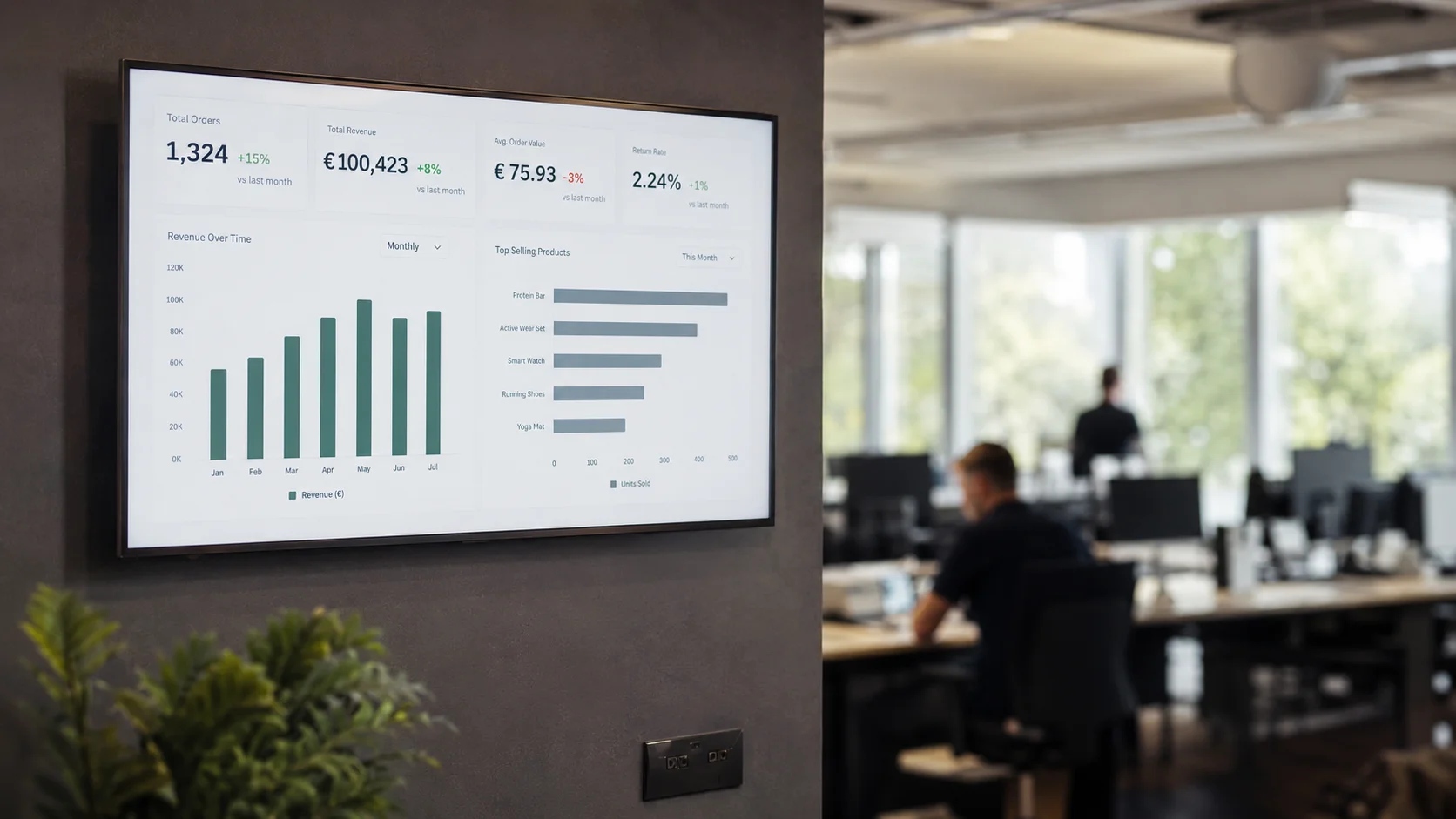
Real-time doesn't mean every value is updated every second. In practice it means: KPIs that are current the moment you look at them, without anyone having to manually pull data. You open the dashboard and immediately see where things stand, not from last week, but from today.
Examples of decisions you can make earlier
- A product causing a loss is flagged after three days instead of three weeks
- Cash flow problems become visible before you're in the middle of them
- A project going over its hours budget is flagged at 80% completion, not at 130%
- Outstanding invoices older than 30 days are always visible, not just at the end of the month
- Productivity dips on a production line become visible before they cost a full day of output
The implementation doesn't have to be complex
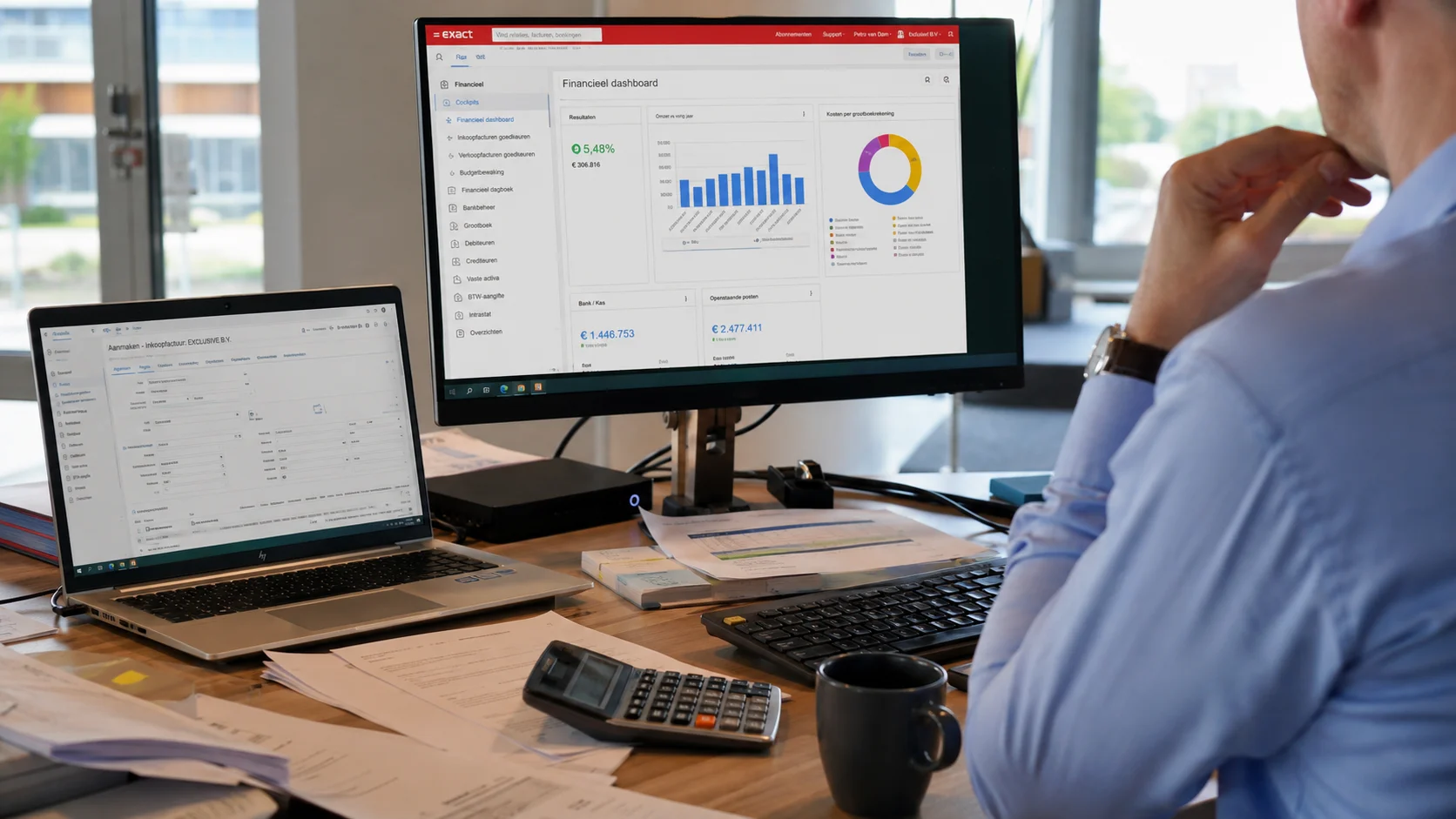
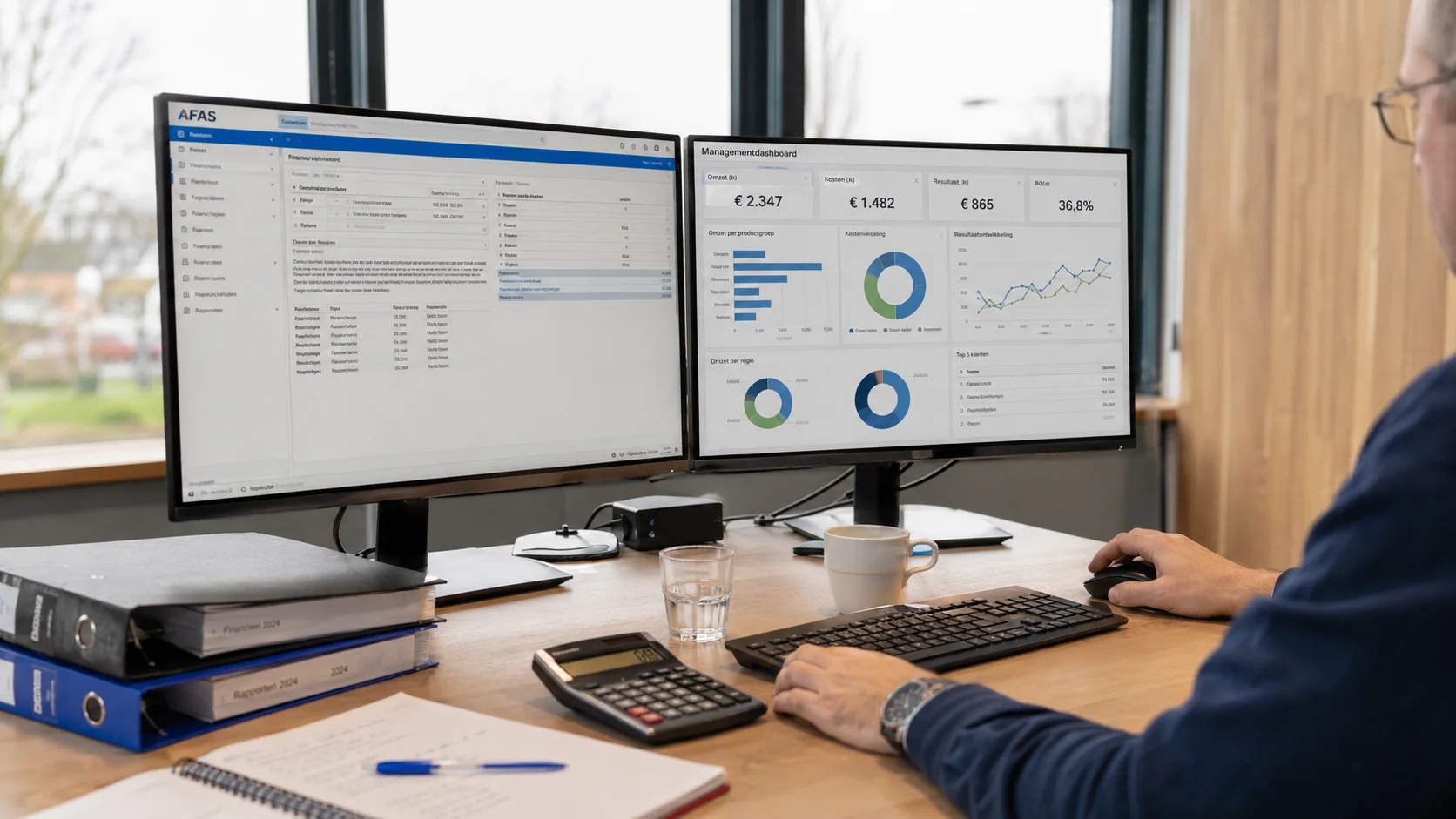
Many business owners assume real-time dashboards are reserved for large companies with an IT department. That's no longer the case. Modern dashboard software connects directly to your existing ERP, point-of-sale system or CRM without you having to migrate any data. Your existing systems keep working exactly as they always have. The dashboard adds the layer of insight that was missing until now.
There's another way to close the gap between 'now' and 'last month'. A dashboard reads in real time from your existing systems. But you can also make the reporting real-time by having the data originate in the same system you work in: quotes, projects and hours you enter are in there immediately, with no connection in between. Then 'real-time' isn't a trick on top of your systems, it's the default.
Ralect offers both. If you want to keep your current systems, most clients go live within 4 to 5 weeks with a fully configured dashboard connected directly to those systems. If you want to go further, your operation runs in Ralect One: one system where the figures both originate and are visible, for office and field. Schedule a free call and discover what fits you.